Monthly Archives: February 2018

Dora’s Journal Entry 2: The Journey to A Semiotic Participatory Project

The article Multimodality, multisensoriality and ethnographic knowing: social semiotics and phenomenology of perception by Sarah Pink highlights how anthropology and the multimodality scholars interpret the relationships among the five senses.


Multimodality perceives communication as the relationship between ‘modes’ and ‘media.’ Kress (2005) in Pink (2011) defines mode as ‘culturally and socially produced resources for representation’ and medium as the ‘means for distribution of these representations-as-meanings.’

According to Pink, multimodality scholars like Kress and van Leeuwen give the sense of sight a higher ranking than all the other senses. This gives me pause and makes me think of the world of those without sight. Kress intimates that all the senses work together but deliver separate information. Is multimodality scholarship suitable to explain how the other senses make sense of the world when you lack sight? And how do they somehow overcome the lack of sight to create other forms of interpretation?


Kress (2005) in Pink (2011)  indicates that words per se ‘rely on convention and on conventional acceptance, words are always general, therefore vague.’ This takes me aback and makes me think that there are people Kress did not think about when making this statement.  Pink discusses pictorial representation as having more meaning than the semiotic symbols of language; however, some of the symbols used in three dimensionally  encoded languages, such as American Sign Language, may be pictorial symbols, which seems to straddle the symbol-picture dichotomy.

This makes me think of how can I do  art-based research in identity open to everyone who cannot rely on all five senses. Pink states that this five-sense modality is a social and cultural construct. Geurts  (2003) in Pink(2011) articulates Merleau-Ponty’s (2002) phenomelogy stating that ‘perception begins in the body and ends in objects.’  This makes me think of streaming reality, the kind of reality experienced by drone racers while wearing goggles and receiving live stream footage from a camera mounted on the nose of the drone. The pilots see what the drone sees. These pilots, when talking about their experiences, give a detailed account of how their whole body feels. There is no separation of the senses. The whole body is engaged in this streaming reality experience. Pink (2011) states, “visual anthropology and any other number of other disciplines…suggest that images only become meaningful in the context of their viewing.”

Pink also proposes a kind of ethnography that is a heuristic-like ethnography, in which we actively engage with the participants. Being a Latina embodying the oppressor and oppressed, qualifies my life experience as the heuristic needed for this project, where I will provide space for people to post their own sentiments and feelings.

The article Directing Energy: Gordon Matta-Clark’s Pursuit of Social Sculpture by Cara M. Jordan  describes Gordon Matta-Clark’s community activist projects in which he provided spaces where people were actively engaged in social issues affecting their community. Jordan argues that Matta-Clark ,like German artist Joseph Beuys, strives to redirect human kind’s destructive tendencies into the creation of socially relevant artistic spaces. Jordan recounts how the New York financial crisis led to the abandoning of the city by upper and middle class families and left it to the poor and the corporate elite, who erected “luxury apartments… in the name of urban renewal” in certain parts of the city, while other parts remained abandoned and dilapidated.   This social crisis created room for Matta-Clark’s “alternative space movement,” which gave voice to activist artists and the marginalized. The article brings to mind Lauren’s project and how she will provide a space for those without a voice. This led me to the realization that I need to provide room for viewers to not only reflect but also voice their sentiments when viewing my project. Matta-Clark’s concept of de-authoring art speaks of a more democratic and direct relationship between art and its audience, which I hope to emulate through my project.

The New York Times article Black With (Some) White Privilege by Anna Holmes (2018) resonates with me as a Latina in the importance given by those in power to features that get us closer to whiteness, such as lighter skin and straight hair. Latinos with these features are deemed prettier, more desirable and less threatening than those that have darker skin and curly hair.

The New York Times article, Brief Encounters, Enduring Portraits of the Displaced, by Jori Finkel (2018), connects for me Matt-Clark’s “alternative space movement,” in which those without voice are given space to see the possibility of normalcy in traumatic circumstances, and Pink’s ethnography, in which the artist produces knowledge along with the participants. As an example, Al Sohl, an artist discussed by Finkel has as her goal not to intrude on those who are displaced but to create a space in which both the artist and participants work through the trauma of displacement.      

These are some of the paintings I want to use in my project. This one in particular depicts the caste system created by Europeans in Latin America to ensure their control of marginalized groups.
Week 2_ reflection

Directing Energy as a visual and arts based researcher

How can a non-artist direct energy to directly address the social conditions in our society? Matta-Clark provides an arts based social ethnography perspective that can be transformative to artist and non-artist in our society. His reading was intriguing. I had never head of his work until this week’s readings. I gathered that he was influential in dealing directly with social conditions such as: lack of access to affordable housing, nutritional inequalities among marginalized groups through the arts and visual social projects with intention to transform and take ownership of the public spaces as artists and non-artists.

His framework reminds me of the Community Health Course that I took in 2010. We had to choose a social issue, survey the condition within the community, and come up with a solution to the problem. I chose school lunch as a social issue. Most public-school students that attend high schools are surrounded by  food deserts. The communities have local McDonald’s and bodega’s which are more attractive than the school lunch program.  Meeting with the students, I had several discussions on what ways we could improve the lunch selection so that more students can eat their school’s food. As an environmental health activist and educator, using video, pictures and drawings to evoke a better understanding of the issues that impact the decisions we make as members of our own community would have been more powerful than just the discussions.

As a non-artists this reading and the Pink article that quoted Dicks et al., work (2006:88) “photographs allow us to see modes that are visual: colour, shape, size, position and light”. Art  such as images, pictures and videos  could be use to spread awareness and direct energy towards solving some of the social issues and broaden the ideas and the types of solutions that can transform our society and inner cities.

This weeks reading and writing Shawn Brown


Arts-Based Research

2/12/2018

Shawn Brown

When reading Sarah Pink’s article several ideologies and theories resonated with my core beliefs about research. Various modalities of the human experiences are needed to holistically understand an experience. Bella Dicks articulates the extended listing of modalities ‘obvious ones include writing, speech and images; less obvious ones include gesture, facial expression, texture, size and shape, even colour’ (2006: 82).
The subtle nuances of modalities help to conduct research that can consider not such apparent variables. These subtitles are extremely important when addressing historically marginalized groups who have not be able to share their thoughts and emotions traditionally. Such groups use music, art, dance, etc. to express their views. A westernized understanding of sensory categories come into play in studies of multimodalities and must be scrutinized because of historical, implicate bias. Research tends to separate modalities regionally, culturally and to regard to senses. Research states that ‘none of the senses ever operates in isolation from the others’ and that this ‘guarantees the multimodality of our semiotic world’ (2000: 184).
Isolation of the five senses is humanly impossible. Researchers would then have to actively chose not consider these thoughts when conducting observations, which is improbable. The society in which we live is one of labels, categories, and structures. The tendency to separate out different modes and media of communication is not only reflected in the way the senses are understood as each ‘providing highly differentiated information’ (Kress, 2000: 184). Images, words, and sounds all communicate messages. The level of complexity of the messaging changes based on several variables; the audience, time, societal norms, politics, etc. Kress speaks about how words are immobile in comparison to depictions which have an infinitely large potential of depictions – precise, specific, and full of meaning, (Kress, 2005: 15–16).
All senses work in conjunction with one another and are used in different ways at different times, not separately. There are commonalities between some of these senses that work seamlessly with one another. The obvious two are writing and drawing. Drawing pre-dates writing and was our first form of communication.

The reading further reinforced my beliefs about infusing the arts into all components of my research. I believe it is a necessity for marginalized groups that have been required to use these outlets to express themselves.

Amanda’s reactions to readings and research developments

I particularly enjoyed the article on Brief Encounters this week. I thought the article was a really good example of how text and image can work together to bring us into the greater whole of experience Pink describes. The second NYT article I was less certain about the purpose of the photos (I actually wondered if the editor added them in) except to enact in the reading process the actual experience of looking at all these folks together and how recognizable they are individually and as a group. I found it interesting how Pink broke down barriers between senses and then between modes of expression. While I wouldn’t have thought about it in this kind of a theoretical ways, some of the experiences I want to explore in my research are so poignant that the sensory experience of them is interconnected and vibrant. When we go to the more intense of experiences humans have, some of what she wrote is very intuitive. I also thought about how when I was in Cyprus I learned that they used to have walking debates where people interested in philosophy would walk around town discussing ideas together. I thought this was great.

Walking is very important to me. It’s something that helps me process what I am going through. What inspired my research project was my mother being diagnosed with pancreatic cancer last March and passing away in June. After she passed away, I would walk literally miles every day. I would walk along the river to and from work every day. Walking was essential for me.

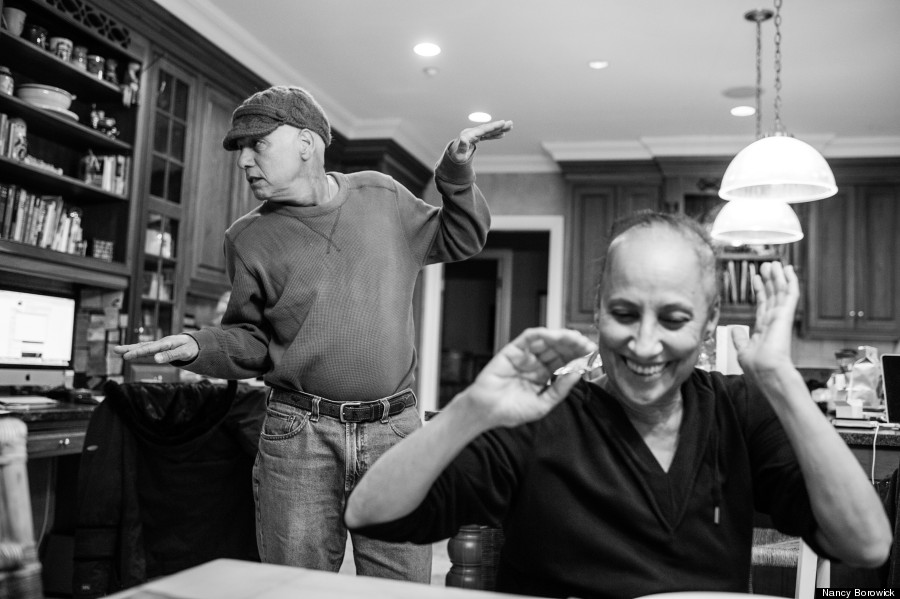
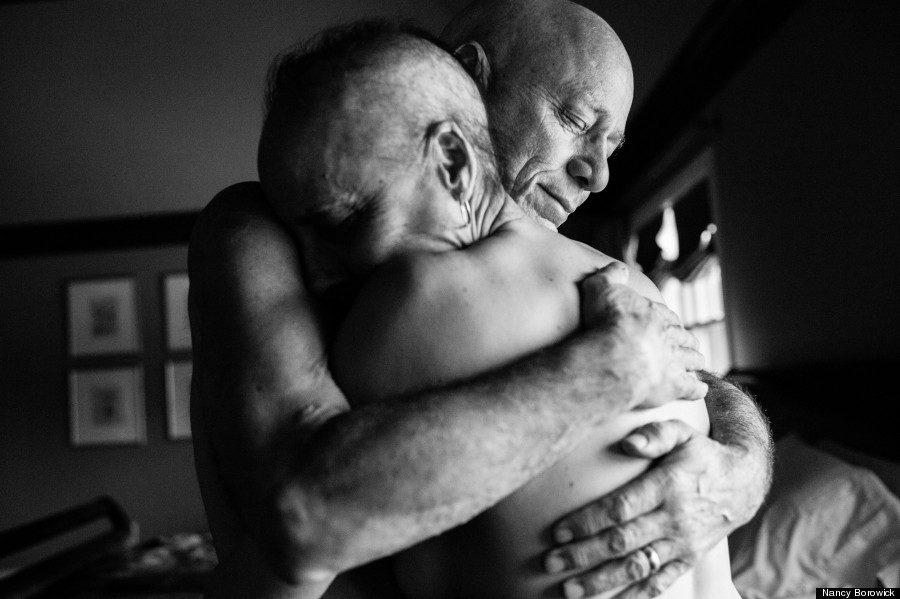
The experience of illness and death I’ve gone through have been very difficult, and they have also not been what I thought they would be. This is why I’m interested in my research focusing on roots and struggle. I think there is so much fear of illness and death in our culture that the knowing which comes from these experiences is something I’m interested in exploring and particularly those representations that make us see what we might not have expected- for example, interdependence in loss. Connection through distance. I’ve attached a few images here that I found interesting towards these questions. The first two are from Nancy Borowick who is a young woman that lost both her parents to cancer (her parents are the ones portrayed below). Her photos make me think of the question, “What if there were no good and no bad but just experience?”

cancer

cancer

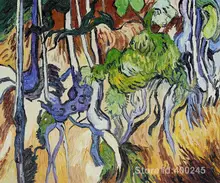
This is an image of roots by Van Gogh I found beautiful.

Image result for root images impressionist

Some questions I have about my work are how much of my own narrative will I bring in. Will I depict any of my own experiences or will these experiences more live in the underlying questions I explore. I’m also thinking about what my process will be. So far, I’ve been thinking that I will give myself a lot of room to collect images towards the broad theme of roots and struggle and in a few weeks start to organize my theme and question more based on inspiration and exploration into these broad set of images. I’ll also likely write about my own experiences for myself during this time to see what narrative and/or images I might like to bring in. I’m also wondering if there are programs online where I could engage in graphic novel storytelling without having the best drawing skills. I could also imagine myself using collage in storytelling.

I look forward to discussing our projects together on Wednesday.

Regina’s Response and Project Reflection

My initial thoughts for my project were to turn my archival research about Jack Kerouac (which is for my thesis) into a novel for young adults. I thought the challenge might be how to make his life appropriate and relatable to young people.  However, in the light of this week’s readings, I’m starting to have new ideas.

The Jordan article about Gordon Matta-Clark–specifically the discussion of social sculpture–inspired me in that it made me want to do something political and provocative, tangible and meaningful.  It made me want to “respond directly to real people and the issues that affected them” (Jordan 37).  And the “real people” that I’d respond directly to could be Kerouac’s fellow young people who felt boxed in by society’s expectations of them.

Then I read the Pink article about using sensations to help people understand and process my work. And since words are “nearly empty of meaning” (Pink 265) I had the thought to add images to my project.  And while I cannot walk around with Kerouac, I can take photographs of the places he went in New York and use images of advertisements that he would have seen.

Now I am thinking that I could make a picture book of Jack Kerouac’s life–using collage to make the “illustrations”.  I could find and cut up tons of different images from his era (WWII, the Cold War, Civil Rights) and arrange them together to fit the narrative.  I might want to find a theme or a moral his life teaches, because that’s the nature of picture books. That might be what I discover along the way.

Nick’s reading response and thoughts on project.

Pink writes about scholars embracing multimodality as a way to more holistically understand and engage with society and culture. When engaging with people from a different worldview or lived experience, I think it is extremely important to embrace respect, humility, and an open mind. Ken Tobin writes about “becoming like the other by being in with” (Heidegger, 1996) in terms of learning from others by existing in a co-researcher environment. A researcher, or arts-based researcher, should be mindful of the inherent power structures in any given situation. The researcher should be giving a voice to the society and culture they are studying, while learning from them. Being in with. When Pink writes about “the ethnographer as apprentice”, she is giving power and the knowledge to the people ‘being studied’, affording them respect as the knowledge-holders, instead of the colonialistic approach.

After reading the Jordan article on Gordon Matta-Clark, I began thinking about arts-based research at a more local level. Reading current newspapers and thinking about injustice can drive one to feelings of helplessness and resignation, but this article highlighted potential outlets for everyone.  “Matta-Clark enacted this (physical and social transformation) on a hyperlocal level by addressing the concerns of a micro-community”. “Socially engaged artwork…can concurrently serve as an aesthetic proposition and as a method to ameliorate problematic political and economic structures”, however daunting a task that is (Jordan, 2017).

In terms my own arts-based research, I would like to hear opinions of others on the projects I am considering. I struggle to think of a project that would be meaningful to me and respectful of that which I am investigating. I am leaning towards an investigation of current children’s picture books. What messages they convey, what they say about what “our” society values, and who and what  is (not) being represented. I imagine investigating many books from the library, purchasing those that stand out to me, cutting and rearranging them in some way.

Additionally, after recently moving to Long Island, I am horrified at how completely the neighborhoods are segregated. There appears to have been some serious red-lining going on here and I think a project based around this might be worthwhile. The phrase “red-lining” is inherently visual and I wonder if a map-based project focusing on boundaries or barriers could be interesting. In any event, I’d love to hear classmates’ thoughts on this.


Article in today’s Times that reminded me of Lauren’s project

Brief Encounters, Enduring Portraits of the Displaced – The New York Times

I particularly like this excerpt fromMs. Al Solh’s interview. It seems to grasp the searching, the  “re-search” of the artistic process. It also reminds me of what Sarah Pink writes (though not in the assigned article) about ethnographic research. If you want to really get in someone else’s shoes, to understand them on an embodied level not merely on an intellectual plane, you have to be with them, walk with them, do what they do.

“The orange splotches I added to suggest wind. And you can see a hint of that in her clothes too. I’m not a big believer in the idea or ideal of the finished drawing. The series is really performative — it’s about the moment of sitting down with someone, facing each other, sharing something. The moment of making the drawing is really what matters to me.”


Lauren’s Journal Entry 1

I’d like to share with you an image of a set of hands shaping clay for the first time. I captured this photograph while one of my kindergarten students was busy creating a cat. I can still remember the excitement in his fingers as he pinched the ears and the slight hesitancy in his voice when he used the new word “pinched” to narrate his actions. As a kindergarten teacher of language learners I hold space for many “firsts” and it is one of the greatest joys of my life. This photo also represents not a “first” but perhaps a new chapter in my teaching career. Before making the leap to elementary school, I taught 8th grade ENL/ELA for 5 years in south Brooklyn. It was there I felt the weight of migration trauma in the classroom and teacher burnout. So these days my work life is a bit more light-hearted and I’ve learned not to be so self-critical because, let’s face it, it’s hard to take yourself too seriously when you have a five year old wrapped around your ankle.

Visual art, in a variety of mediums, as always played a large role in my classrooms. In the middle school setting, digital storytelling was a way for many of my newcomer students to celebrate their heritage, to grieve whatever it is they lost in the migration process, or more often than not, to wrestle with the duality of their identity. The images they carefully selected for their stories helped them build an authentic narrative and a voice they could carry out into the world. In the elementary school setting, drawing is the precursor to oral and written communication. While my kinders can readily communicate needs and wants, drawing is the best way for them to communicate what they feel as they develop emotional intelligence.

Barone and Eisner (2012) cast a bleak picture for arts-based research in education. The governing sentiment seemed to be that such unclear or “messy” methods and outcomes could not impact teaching and learning in a meaningful way. It is important to remember that in 2012 we were at the height of the Common Core roll out, student performance on standardized assessments became the measure of success and teacher bashing on public platforms was largely accepted. Yikes. However, I do believe the climate is changing. As school systems recognize the impact of the social and emotional well-being of students on learning and more importantly, accept responsibility for it, arts based research will ride that wave. This connection is made more apparent as Barone and Eisner (2012) state, “In arts based research, the aim is to create an expressive form that will enable an individual to secure an empathic participation in the lives of others and in the situations studied.” Such emotional expression is our greatest insight into how students feel and offers invaluable information on how to motivate, and ultimately, teach students. In my experience, I have found this to be particularly powerful when working with marginalized populations such as English language learners and students with disabilities.

Lisa Millsaps_ Week 1 Reading Reflections

I am so glad to enroll in a visual and arts-based research course. The last time I enrolled in an Art course was during my undergraduate studies as a pre-med student.  The ceramics and visual art courses helped broaden my visual lens to endure the science and math courses. I was able to conceptualize math and science concepts through a visual lens by drawing objects to help me to retain the information. The readings for week one reminded me of my visual and arts-based course experiences.

The following week 1/one reading What is Not Arts-Based Research? provides an overview of arts-based research as a foundation for creating expressive forms of art that should enlighten audiences (Barone & Eisner, 2012) I anticipate that this course will further enlighten me as we dive into literature and discuss research ideas to visually enhance our learning experiences and research ideas in the Urban Education doctoral program.

The second reading for week 1/one Eisner (2001), hopes that qualitative research expands, as do I, so that it is not confined to just print media. He discusses that there are parallels between the visual arts and qualitative research. Gene’s  picture with a student at the alternative high school in New Jersey is an example of how visual art and qualitative research connect together and be a transformative piece for others to see.

I am reminded that through Gene’s picture and week 1/one readings that we can articulate an idea, concept, proposal or a framework not only through writing but also through the arts.

Lisa Millsaps_ posted image and comments

This image is of an advisement center at Brooklyn College. As I explained to the class on Monday, I cannot put all of my feelings of this photo into words.

When was this photo taken? I am not sure but the image invokes a feeling of urgency and inquiry of, am I at the right place, because of the disposition of the student entering the room. For me, the visual artifact conveys an “active” message that there should be a need to see an advisor to discuss your academic and career trajectory.

As an educator, I would like to explore the rationale for this particular photo and if the message on this page that reads “Academic advisors are here to help you graduate on time!” helps capture the moment and message that is intended to be conveyed and can or should the message be conveyed in another way to various audiences that view this page.